
30 March 2026 · Henrik Prestmo · 5 min read
I Should Have Called the Drinking Fountain Art
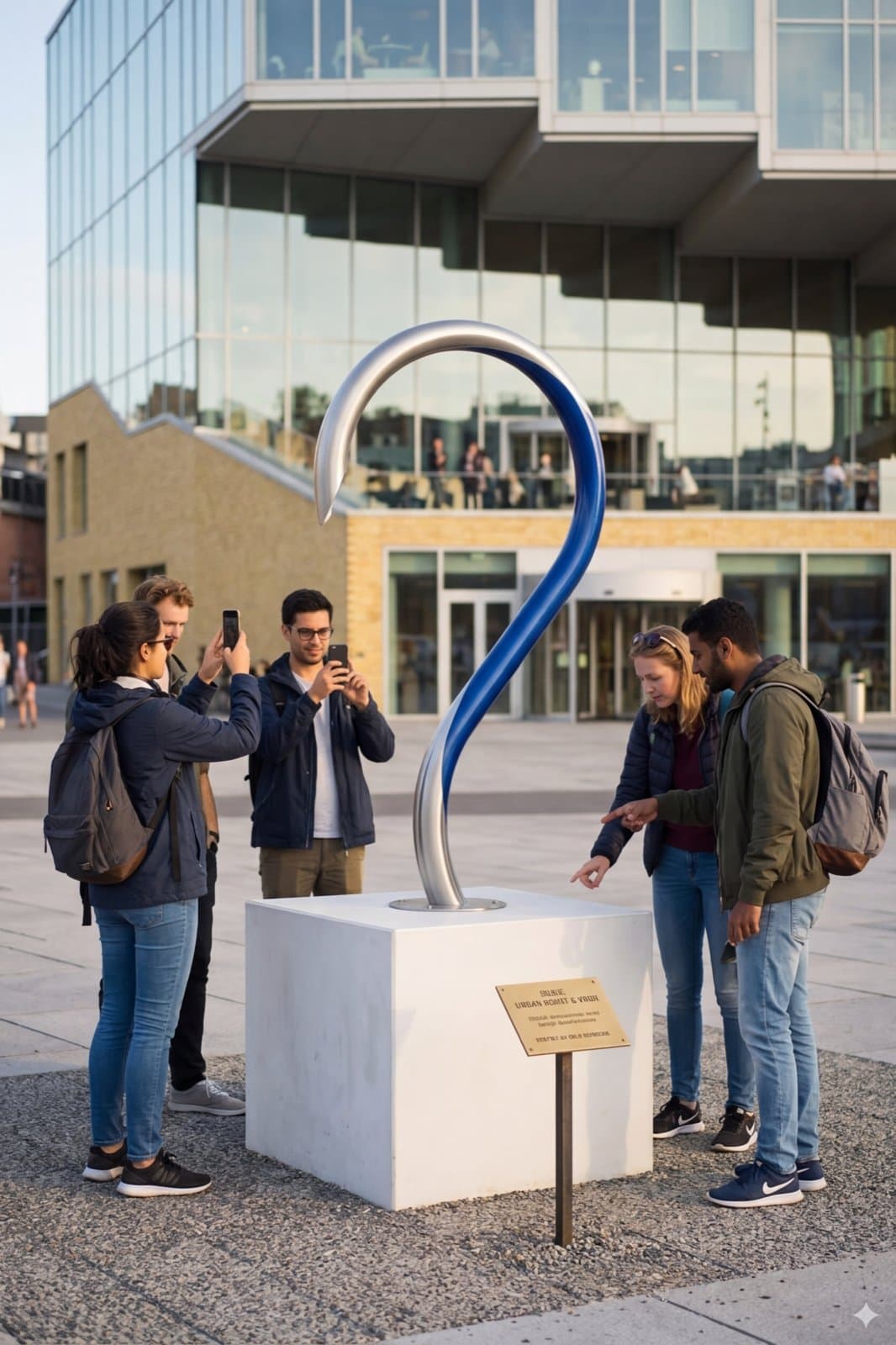
There's something absurd about how municipalities spend money.
A sculpture for €40,000 in a roundabout? No problem. A drinking fountain that gives thousands of people access to clean water in a public space? Then we need three rounds of public tender, the budget has to come from water and sewerage, and the urban environment agency has to decide whether this is even something they should be doing.
I've been selling drinking fountains to Norwegian municipalities for several years. And the pattern I see is always the same: it's not the will that's missing. It's the system.
Wrong budget line
Drinking fountains almost always end up under the urban environment department or water and sewerage. That sounds logical — it's about water, after all. But in practice, it means the fountain competes with pipe maintenance, sewer rehabilitation, and infrastructure projects with budgets locked up for years ahead.
Nobody in the water and sewage department lies awake at night thinking about drinking fountains. They have entirely different problems.
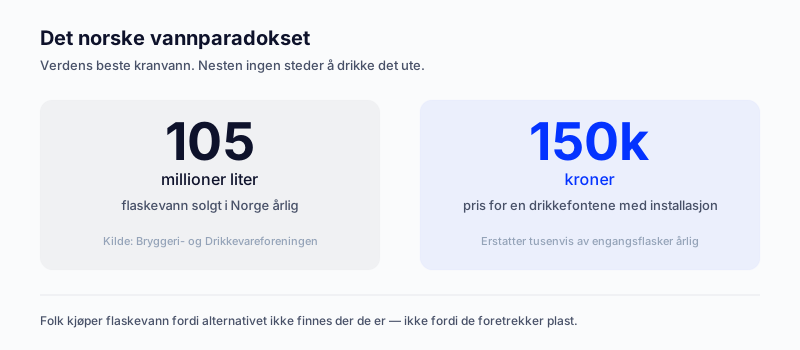
And the procurement rules? For public purchases between NOK 100,000 and 1.3 million (~€9,000–€115,000), there are requirements for competitive bidding, documentation, and traceability. A drinking fountain at NOK 150,000 (~€13,000) lands right in this zone — heavy enough process that many let it slide, too cheap to be a priority project. The result is that many municipalities simply drop it — not because they don't want to, but because it's not worth the hassle within the system they work in.
How real is this? In Oslo, the urban environment agency cut NOK 32 million from its budget while water and sewerage fees increased by NOK 10 million. The result: fountains at Spikersuppa, Frogner Park, by the Central Station, and at the Deichman library were shut down. Drinking water in public spaces was the first thing to be sacrificed.
If it were art
Now imagine the drinking fountain wasn't infrastructure, but art.
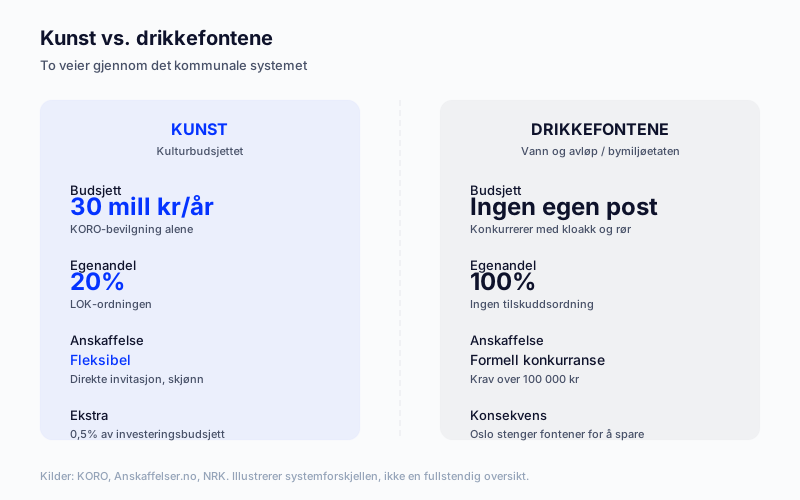
Suddenly we're in an entirely different world. The culture budget has dedicated funding for art in public spaces. Procurement requirements are far more flexible. The municipality can invite artists directly, make purchases based on judgment, and decide faster.
KORO — Norway's agency for Art in Public Spaces — manages approximately NOK 30 million annually for art projects. Through the local community scheme (LOK) alone, NOK 14.3 million was distributed in 2025, across projects nationwide. Municipalities can apply with only a 20 percent co-financing share. There's even a scheme where municipalities set aside 0.5 percent of their investment budget for art in public buildings.
For comparison: the price of a Sildr drinking fountain with installation is NOK 150,000. That's less than what many municipalities spend on a single artwork in a roundabout.
Nobody questions whether a sculpture is "necessary" the way they question a drinking fountain. It's not the money that's missing. It's which box you put the thing in.
A question of what we value
I'm not saying art in public spaces is wasted money. On the contrary — I believe public spaces deserve both art and function. A drinking fountain can be both. It can be customised with graphic design, spray paint, collaboration with local artists. We've done it ourselves, including a collaboration with artist Thomas Stønjum for Bærum municipality.
But the point goes deeper than aesthetics. It's about how municipalities think — or don't think — about drinking water as part of the public realm. Meanwhile, 105 million litres of bottled water are sold in Norway every year — in a country with some of the world's best tap water. It's not because people prefer plastic. It's because the alternative doesn't exist where they are.
We put benches in parks without discussing it. We plant trees. We install lighting. All of this is obviously infrastructure that makes public spaces better for people. But drinking water? That's somehow nobody's job.
The drinking fountain as a system
Very few municipalities think of drinking fountains as a system. A deliberate part of the city's infrastructure, on par with bicycle racks, waste bins, and seating.
In other European cities, this is self-evident. Paris has over 1,200 public drinking water points — including 106 of the iconic Wallace fountains that have been there since 1872. Rome has between 2,500 and 2,800 nasoni, small iron fountains that have given Romans free drinking water since 1874. This isn't accidental. It's a deliberate choice about what kind of city you want to be.
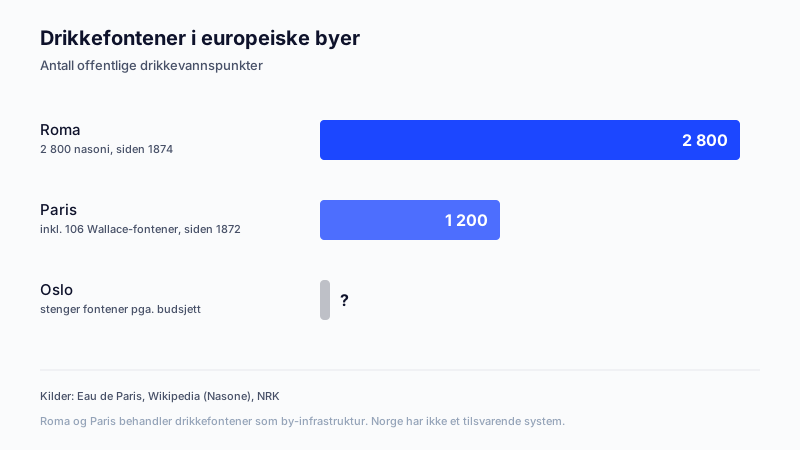
Norwegian municipalities have tap water as good as anywhere in the world. Yet we make it surprisingly difficult for people to drink it outdoors.
The irony
So here's the real irony: if I had marketed Sildr as an art project instead of a drinking fountain, the sales process would probably have been easier. Less bureaucracy. More flexible budgets. Faster decisions.
That perhaps says more about the system than about the product.
The drinking fountain deserves a place in public spaces — not as a curiosity, but as a given. If it has to be called art to get there, that in itself is a problem worth talking about.
Also available in norsk
← Back to blog